
Hello again. It’s the end of the month, and as promised, I’ve got a new post to share with all of you. I’ll start by getting something big off my chest, mainly hoping it’ll help clear my mind and allow me to relax. For many years now, January has been a tough month for me. There are various reasons for this, one of which I only realized a couple of weeks ago. To put it simply, I believe that for several years now, I’ve been suffering from seasonal affective disorder (or SAD) between the beginning of January and around halfway through February. It would explain a lot, as for many Januarys now, there have been many days where I’ve felt sluggish, unmotivated, confused, or just plain unhappy. Why did it take me so long to connect the dots? Good question, I’m not quite sure myself.
The best reason I can think of is that, before this January, I hadn’t had it quite as bad as I did this time around. It wasn’t at the forefront of my mind when I woke up in the past, and this time, it was mainly for reasons I’d prefer not to get into. Thankfully, I now have a much better understanding of why this happens and how its severity can be lessened. I think that from now on, I’ll be better equipped to deal with this when it comes around again next year and for the next several after that. Again, I give the Lord all the credit and glory for opening my eyes to what’s been going on with me. I’m also very thankful to my family and friends for giving me advice and sharing their own experiences with me, as SAD is quite widespread and has been for quite some time. What a fitting acronym, isn’t it?
Anyway, now is the time for me to talk about my hobbies. I have many of them, as I’m sure you know if you’ve read through or skimmed through all the other posts I’ve made. However, as I’m sure many of you can relate, I’ve gone through phases where I’ve been really into one form of entertainment. A few months later, I put what I was doing on the side in favor of something new and exciting. This is a benefit of living in a digital consumerist society, but make no mistake, it can also be a detriment if you make an idol out of said entertainment or hobby. I want to think I’ve largely avoided that in recent history, but that hasn’t always been the case. If this is an issue in your life, start addressing it now. It’s better to get it out of the way quickly instead of letting it fester and become a significant distraction.
With that out of the way, there are two things I’ll highlight from this month: the worst movie I’ve watched and the best manga that I read. While I have been playing or replaying certain video games more so than watching movies recently, I felt the need to give my honest, unfiltered thoughts regarding a film that I think not only signaled the death of one of my favorite media franchises but was also so bad that it may very well end up being the worst movie I watch this decade. And believe me, I’ve watched some pretty awful dreck throughout the 2020s. As for Rurouni Kenshin, the manga I’ll be talking about, it’s excellent. The author, though? Different story. I’ll get to that in a bit, however. Here’s my review (or rant, I guess) for the pile of crap that is Star Trek: Section 31.
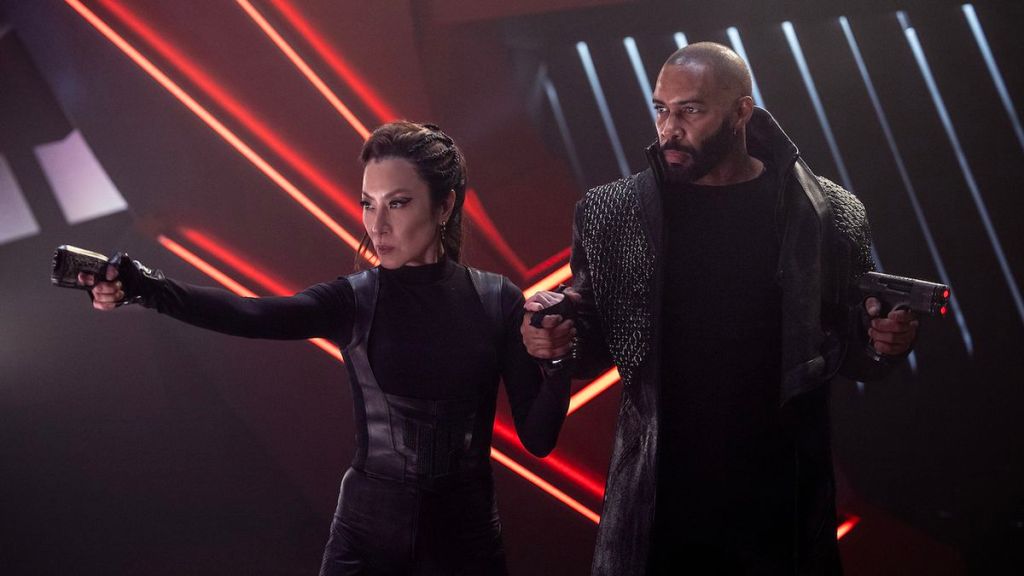
What’s so bad about this movie, anyways?
Everything. Ok, maybe not quite everything. The special effects, while forgettable, weren’t awful. I thought Michelle Yeoh (pictured above) gave an alright performance, even though she couldn’t sell her role as an evil intergalactic empress turned antiheroic femme fatale. I almost entirely blame the script and the direction, as I do, for why this movie failed so hard. However, a bit of context and history are needed to explain why this movie was so bad.
First off, Section 31 is a spin-off of the recently ended Star Trek: Discovery. Discovery was the first of many new Trek projects that have come out in the last several years and is also the longest-running of those new projects. Without getting too much into the show itself, I’ve never really cared for it. The first season, which began in 2017, had some good ideas, but it didn’t capture me as much as the old Treks did. The second season also failed to do this in many ways, and after it ended, I decided that it wasn’t worth my time, and I stopped watching. While several fans enjoyed Discovery, it is quite divisive amongst the larger Trek fanbase, with many feeling like I do. Much of the derision boils down to the fact that newer Star Trek, or “NuTrek” as many call it, often doesn’t feel like Star Trek.
But what exactly does that mean? I’m glad you asked. Star Trek, at its core, is a series about many things. The exploration of space and strange new worlds are what most flock to see, but at its core, it’s about the dignity of life, an idealistic future where racism, poverty, and strife have largely been eliminated or wiped out entirely, and ultimately having an open mind and being decent towards others regardless of what species they are, or what part of the galaxy they come from. For a series that is quite humanist at times, there are genuinely valuable and applicable life lessons that can be learned from great characters like Picard, Sisko, Odo, Data, and so on. There is a reason why Star Trek was so huge in the 80s and 90s: the messages it tried to present were both fun and meaningful, and it also had a lot of space battles and drama. People love that stuff.

In the meantime, even after mulling it over for a few days, I still have no idea what Section 31 was supposed to be or should be about. Was this supposed to be a spy thriller with bits of dark comedy spliced in? A bad rip-off of Mission: Impossible? Suicide Squad, but with quirky British aliens and “chaos goblins” instead of the Joker and Harley Quinn? Do the producers and actors even understand what was being made here? If you told me they honestly didn’t have a clue, I’d believe you without question or hesitation! This made The Final Frontier look like The Wrath of Khan (or, in more understandable terms, The Room look like Citizen Kane). This makes nearly every other bad or “so bad it’s good” movie I’ve seen seem like honest-to-God masterpieces, films that get rereleased by the Criterion Collection or preserved in America’s National Film Registry. Do you know how hard that is to do? Really freaking hard.
This movie sucks. The acting was ridiculous most of the time, the script made no sense, and there was never really a sense of deeper meaning or who was worth rooting for. Why were the characters doing what they were doing? What relevance did this have to the ultimate story of Star Trek? Was this even Star Trek? Well, at least I can say no to that. In fact, I’d even say this killed Star Trek as we know it. The past is obviously in the past, but I really wish it wasn’t in this case. Star Trek hasn’t been a true giant in the industry for over a decade now, and there are many reasons for that. This flaming dumpster is a testament as to why, and why, even though there are still some gems that get churned out periodically, like season 3 of Picard (according to my dad, the biggest Trekkie I know) or Strange New Worlds (according to people on the internet that I trust), Star Trek as a franchise is way past its prime. It is, for better or for worse, dead. Is it possible that a resurrection is meant to happen in the future? Possibly, but I’m unsure how or if that will even happen.
Alright, that’s enough of that. It’s time to move on to something that I think is worth talking about: Rurouni Kenshin. January was a great month of reading for me, especially regarding manga. I finished more than 5, with 3 of them getting a 10/10 from me (including Kenshin), and it was overall a good use of my free time, in my opinion. As I’ve talked about before, I get so much enjoyment from reading new books or manga nowadays, far more than I used to. However, when discussing Kenshin, there is something that always needs to be addressed that overshadows the series itself, and that’s its author, Nobuhiro Watsuki. However, instead of discussing Watsuki first, I’d like to talk about why I liked Rurouni Kenshin so much and why it’s more important than the artist who created it. By the way, mild spoilers ahead.
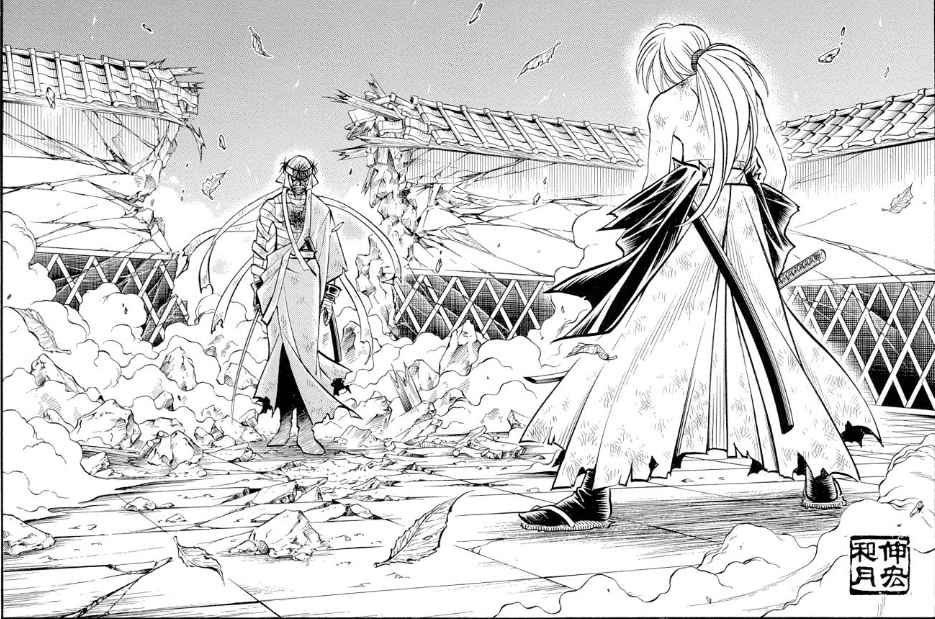
How did Rurouni Kenshin become one of my favorite manga?
I’ve always believed that the best stories are the ones that hook you immediately, keep your attention throughout their runtime, and end in a sensible, satisfying way. Rurouni Kenshin is unique because while it does have a very good ending that wraps up everything satisfactorily, I would definitely not call the beginning of the series great. While the Tokyo arc (chapters 1-47) does a good job of introducing the main characters, such as Kenshin himself, his future wife Kaoru, and their good friends Yahiko and Sanosuke, the story itself is relatively tame and doesn’t really go into tons of depth about the world and the characters. There are some cool moments where Kenshin beats up some bad guys with his reverse-blade katana (which comes from his vow to never kill again after living a very bloody life before the main story), some lighter moments where the main group of characters engage in genuinely humorous banter over simple things like getting groceries and Kaoru’s growing affection for Kenshin, and some nice little arcs where new characters are introduced and they fight some relatively small-scale villains. All in all, it’s fun and good, but nothing I’d call great.
Most who’ve read it will agree that the series picks up after chapter 48, where the infamous Kyoto arc (chapters 48-151) begins. It’s one of three major story arcs in Kenshin, and it is also the best one, in my opinion. The Kyoto arc introduces a bunch of new characters, including the goofy ninja Misao and the genuinely menacing supervillain Shishio, and it also does an excellent job of diving into the past of every main character and being a really fun adventure altogether. The pacing is very good, every character has their moment to shine, and the stakes feel quite high. This is what you want in an adventure story, and I have to give Nobuhiro Watsuki immense credit for writing both this arc and the Jinchu arc (chapters 152-255), which is the third and final major arc of the series. While Jinchu is not as good as Kyoto overall, it’s still an excellent piece of storytelling, and it is easily the emotional highlight of the series. It’s gripping, filled with intense feelings of regret and determination from the main characters, and overall a very good arc that serves as a great sendoff to an excellent manga. There is a sequel series that began in the mid-2010s, but I have yet to read that. I’ve heard good things about it.
So yeah, I think Rurouni Kenshin is excellent. It’s the best manga that I read during this month, and I would also say it’s one of the best I’ve read in general. While the Tokyo arc does prevent it from being higher on my top 10, the Kyoto and Jinchu arcs are both so good that it would be a disservice to not recognize them for what they are, which is a pair of truly awesome stories. And now that I’ve talked about why I like Kenshin as a series so much, I think it’s time to address the elephant in the room, and that’s Nobuhiro Watuski.
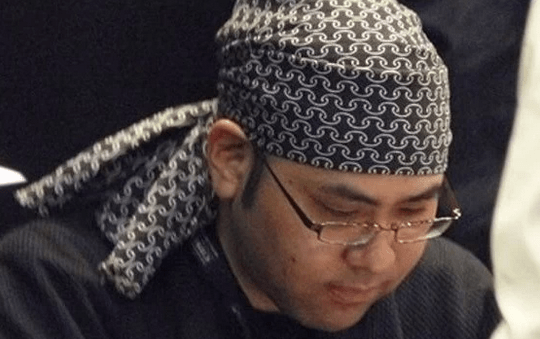
In the realm of manga, Watsuki is well known for being the author of Rurouni Kenshin, its sequel series, and Buso Renkin, which has received mixed reviews over the years. He is also well known for mentoring several famous manga artists, the most notable being Eiichiro Oda, the creator of One Piece. However, this pales in comparison to what he is most known for nowadays, which would be his conviction of possessing child pornography in 2018. When Tokyo police raided his office in November 2017, they discovered hundreds of DVDs containing some truly awful material, which immediately destroyed his reputation among nearly every manga reader. However, despite breaking the law in the manner that he did, he served no jail time, was fined the equivalent of $1900 in American dollars, and went right back to writing the sequel series for Kenshin. He has also seemingly been forgiven by several major artists in the manga industry, and people still collaborate with him to this day.
While many harsh criticisms can be thrown at the Japanese legal system, as well as how certain artists defended his actions, that isn’t the focus of what I want to say. Instead, I’d like to put forth the idea that despite the horrendous actions of Nobuhiro Watsuki and his seeming lack of repentance for his crimes, Rurouni Kenshin is still a manga worth discussing and celebrating. It’s a work of art that neither endorses nor includes the personal proclivities of its author, and tying it to Watsuki’s lack of moral decency is unfair to the story as a whole. I’ve always believed in separating the art from the artist because many great movies, songs, and books were created by flawed people who have done terrible things. Quite often, these works of art do not reflect their authors’ personal beliefs or actions and can be looked at as their own thing instead of an extension of their authors. The authors may draw upon their worldviews and experiences when creating a story or a song., but I believe that it’s ultimately up to those who consume these stories and songs to interpret them and decide what they’re all about.
Two things can be true: Nobuhiro Watsuki did some awful things, and he should have seen prison time or worse for what he did. In the meantime, Rurouni Kenshin is a very good manga about responsibility, redemption, and renewal. This can also be said: Kevin Spacey either engaged in or allegedly engaged in sexual misconduct with numerous men, and he is also one of the greatest actors of his generation. The person known as Kevin Spacey and the actor known as Kevin Spacey are two halves of the same man, and I believe the actor and the acting that he does should be recognized for how good it is, especially in movies like The Usual Suspects and Se7en, just as I believe Rurouni Kenshin should be recognized as a classic manga that is great despite the crimes committed by its author.
Before I finish this off, I want to make it clear that even though this is what I believe, it doesn’t mean that everyone else has to agree with it. Heck, I’m sure there are some reasonable people out there who would look at this and completely disagree with me. Some of those people may have been abused as children or sexually exploited in the past, and if that’s the case, I totally understand why they would disagree with me, and I think they’d have their reasons to do so. However, my opinion on this won’t change. I have my reasons for believing what I do, and I will continue to do so.
Well, that’s the end of this post. Honestly, it felt great writing this. I think a lot of it stems from me finally deciding to come up with a proper, rigid plan for this blog. Gone are the days of saying I’ll do something eventually and then not following through. At least, I hope they’re gone. My next post will be in mid-February, and I’m sure I’ll have a lot to say about whatever interests me at that point.
Until next time, thanks for reading, and God bless.
 I Wrote A Thing