Good day, I’ve got a new post to share. This is a subject I’ve wanted to talk about for a while, as manga is a big interest of mine. Be warned, this is going to be a pretty long read, so I’d recommend that you have something to eat or drink nearby. With that out of the way, let’s rock.
First off, let me start off with a story in two parts. Late last week, I said farewell to one of my favorite manga of all time: Land of the Lustrous by Haruko Ichikawa. After it debuted in 2012, it has become somewhat of a staple of seinen (meaning marketed towards young adults) manga for many in both Japan and around the world. There are various reasons for this, whether it be the unique artstyle, the themes which include the cycle of life and the longing for purpose in life, or the writing in general. Personally, it’s the writing that especially did it for me. Phos, the main character of the story, is one of the most interesting I’ve ever come across. Their journey of self-discovery, self-loathing and finally self-acceptance is quite compelling, and it makes for a fascinating read.
But before I turn this into a full-fledged review, let me tell the second part of this story. Last Sunday, I was in Sunday school and was taking notes for that day’s teaching. Further into the lesson, our teacher, a good friend of mine, began to talk about how many early-century Christians often avoided forms of entertainment like plays in a theater due to them viewing those plays as ungodly distractions. He then went on to talk about how many modern-day Christians seem to gloss over the content of many of their favorite TV shows and movies, and that the concerns of those who came before them in the Puritan and old Reformed communities appear to have been left in the dust. Other examples given were video games, music, and of course, manga.

This message was intended to be convicting, and while it didn’t fully do that to me, it did cause me to think for quite a while. I agreed with the overall idea that entertainment is generally fine for us to consume as long as it doesn’t cause us to stumble or to put God second or worse, but it also made me wonder about what kinds of entertainment we really should be consuming. Spoiler alert: I think manga is generally fine for Christians to check out. While most manga come from the perspective of those who follow Eastern religions or in many cases nothing at all, it’s still a medium in which some very fascinating ideas have been created and spread across the world. Some great stories have come from this spreading of ideas, and I think that’s something to be celebrated.
That being said, my endorsement doesn’t mean that it’s all good to read. There are certain types of manga that Christians should do their best to completely avoid, as they contain content that can be both crass and graphic. These are things to be mindful of, but how exactly do we differentiate what exactly is okay and not okay beyond the obvious subject matter within each manga? Glad you asked, because that’s the entire point of this post.
In this post, I’ll go over 3 different types of manga: what I think a Christian can read, may read, and shouldn’t read. Fair warning: this isn’t meant to be a list of recommendations, but if some of these series end up sounding appealing to you, then by all means, check them out. Except for the ones I think you shouldn’t read, try and stay away from those. Or don’t, your choice. Either way, let’s start with what I think Christians can read.
So, what is a can-read manga?
To put it simply, my definition of a can-read manga is one that’s largely devoid of graphic content (violent or sexual), has a story that is relatively easy to get into, and has things that could be considered Christian-like, such as defined moral standards and the promotion of certain values. These are manga that I think virtually any Christian can read, as there’s almost nothing that could seriously challenge their beliefs or make them stray away from the right path. Of course, it’s hard to find a fictional story nowadays that perfectly encapsulates all of these wants, but there are definitely some series out there that fit most, if not all, of these criteria.
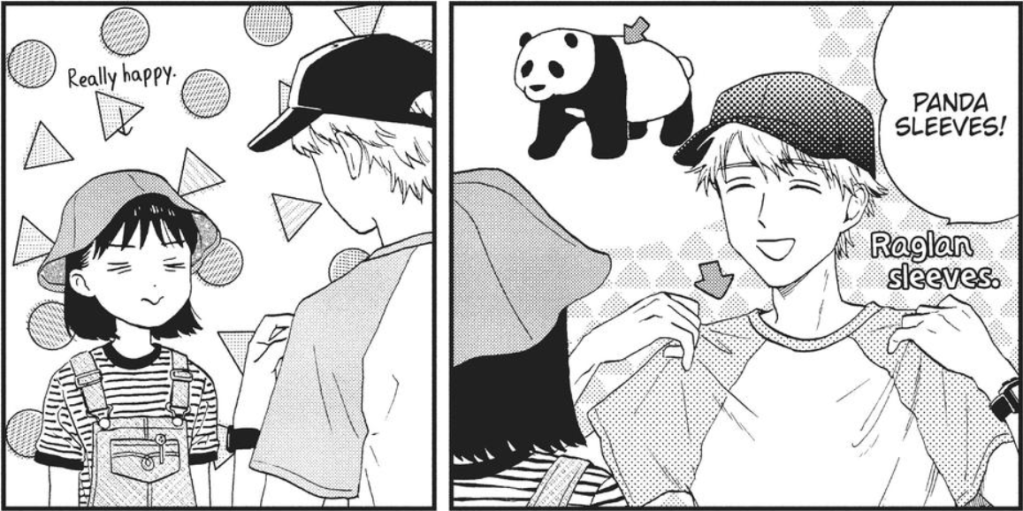
An example I would give is Skip and Loafer, which is one of my favourite slice-of-life stories. It’s a coming-of-age story focusing on a young girl from rural Japan going to Tokyo for high school, where she meets many new friends, including her eventual on-and-off boyfriend. In this series, family values and healthy friendships are exalted, the story is wholesomely written and tackles realistic issues which many Japanese high school students face, and while there is romance, it is very tame and nothing sexually explicit happens.
While there are some questionable moments, the main one regarding the main character’s transgender aunt, these issues are only minor gripes overall, and I would still call this a good example of a manga that Christians can read. It obviously doesn’t meet every single criterion perfectly, but it’s one of the closest to doing so that I’ve read at the very least. Another can-read I’d recommend is Spy x Family, which is basically pro-family unit propaganda disguised as a spy comedy. It’s quite wholesome as well, and it’s genuinely very funny.
What about the may-reads?
Moving onto the may-read category of manga, which is easily the most common of the 3 types from my experience. Whereas can-reads are ones that I would recommend to virtually anyone at any point in their faith, may-reads are for those who are both more solidified in their beliefs and can stay steady when greeted by potential stumbling blocks. May-reads tend to contain more mature content and some questionable things such as violence, occasional sexual scenes, and worldviews/ideas that can sway those who aren’t fully committed to the Bible. What separates the may-reads and the don’t-reads is how these things are presented: may-reads carry this sort of content in a subdued and stomachable way, while don’t-reads are very liberal in showcasing the extreme sides of violence and sex, with many of it bordering on outright pornography. More on this later.
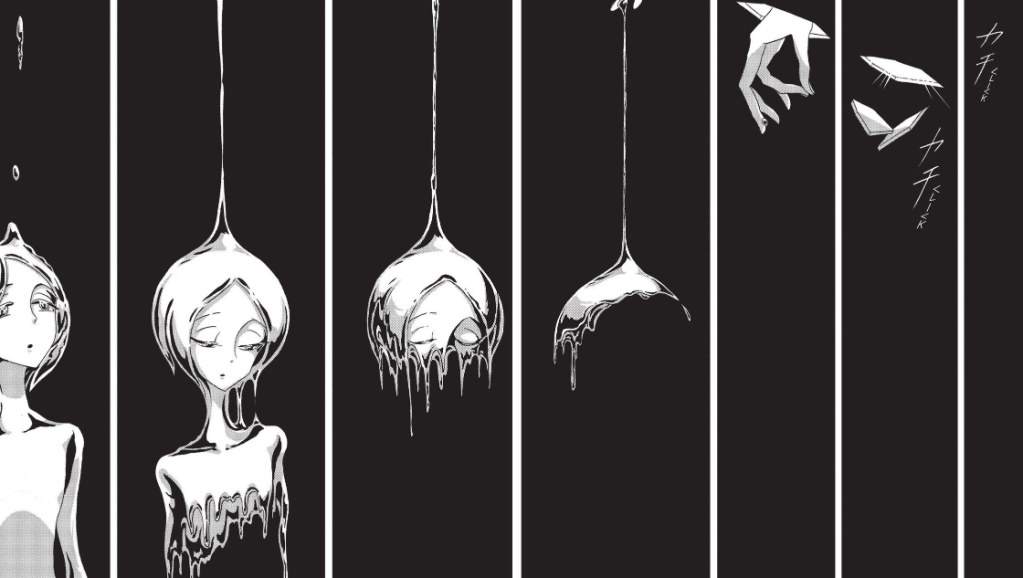
To give an example of a may-read, I’ll use the aforementioned Land of the Lustrous as an example. Despite my enjoyment of its story and the multi-layered characters and art, this is not a series I’d immediately recommend to anyone, especially not newer Christians. The story is largely a Buddhist allegory, with many of its ideas being shown from a Buddhist point of view. There are also a few moments which I wouldn’t hesitate to call disturbing: the psychological pain that the main character (Phos) goes through, the subtle grooming of another character by the main villain, and the escalating violence can all be challenging to read through, even though it’s far tamer than some of the other manga you can find out there. My advice for stories like this? Pray for discernment. Ephesians 5:6-10 states that we must watch for those who deceive with empty words, and that we also must try to discern what is pleasing to God.
May-reads are not for everyone, and if you recognize that God may be telling you that something isn’t for you, then you should listen and not read it. I try to do that with every story I read nowadays, especially after I came across what will be the main subject of the don’t-read section. From my experience, I did not sense this warning with manga like Vinland Saga and JoJo’s Bizarre Adventure, while I did with Goodnight Punpun and A Girl on the Shore (which are both by the same guy, funnily enough). Land of the Lustrous falls in the former boat, and in a way it was probably a good thing I did read it. I now know more about Buddhism than I did before picking it up, and I also now know that my earlier suspicions about Buddhism were right all along, and that would be that Buddhism is false. Now, onto don’t-read manga.
What makes a don’t-read a don’t-read?
Lucky for me, don’t-reads are the easiest for me to explain. If you’ve been following what I’ve been saying so far, you’ve probably figured out what constitutes a don’t-read: anything that has very disturbing content, whether it’s violent, sexual, or some gross combination of the two. Series with super crass humor and lowbrow values are also included here, as they typically aren’t very rewarding nor edifying. While you can make arguments for reading can-reads and may-reads, I would highly advise Christians stay away from don’t-reads of any sort, regardless of how appealing they may be on the surface.
Take Berserk, for example. It’s not only one of the most acclaimed manga of all time, but it’s also one of the most influential, having been the main inspiration for the Dark Souls series of video games. Want to know what it also is? One of the sickest, most depraved stories I’ve ever read. At least, the majority of it is. While I can handle extreme violence despite it generally being something we shouldn’t expose ourselves to, I found the over-usage of rape, sexual abuse, and borderline pornographic imagery to be both disgusting and hard to read. There was one moment in particular which made me physically ill, and I later dropped the series because of that. Many people defend the depiction of rape as “historically accurate”, given that it was quite common in the era in which Berserk is supposed to be set in, which is a fictional version of 15th-century Europe. The thing is, I don’t care. There is no reason to be looking at images that depict such disgusting things. You can imply it and not show it, but that obviously wasn’t the late author’s thought process when writing Berserk. This was the series that caused me to become far more alert of what’s on my radar for manga and books in general and to pray for discernment before I get into something, and in a way I have to thank it for that.
Of course, Berserk is not the only manga that has issues like what I’ve outlined above. Several other series contain content like this in spades. There are also thousands, if not hundreds of thousands of pornographic comics and animations across the internet and in several adult stores. Hentai, eroguro, lolicon, and every other kind of porn-related media that comes out of Japan are all hunks of garbage which drive people away from God and send them down the rabbit holes of addiction and depravity. There is nothing beneficial to reading don’t-read manga and looking at hentai (or pornography at all for that matter), so don’t get caught up in the hype. While 1 John 2:15-17 could arguably be applied to most of, if not all of the media we consume today, I think it’s especially relevant to this type of manga. The desires of our flesh and eyes aren’t from God but from the world. Stay away from these things.
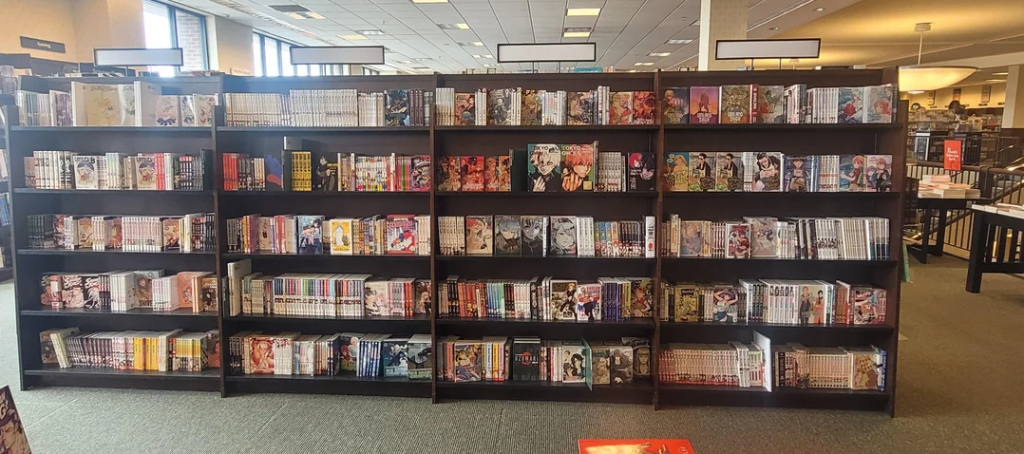
So, now that I’ve covered all 3 types of manga, I’d like to add on a couple more things. For starters, you can also apply what I’d call the “3 types rule” to other forms of media, whether they be television shows or video games. I’d advise to still pray for discernment when thinking about watching or playing certain things as well, as you can get tangled up in all sorts of things you shouldn’t, just like how certain manga can cause some to stumble.
Secondly, even though I will defend the reading of manga or the consumption of most media, always remember that God must come first in everything you do. Don’t let your favorite books or shows distract you from him and especially don’t let them become your only sort of entertainment or nourishment. Set aside time for the Bible, for prayer, and for meditation. Colossians 3:2 and Philippians 4:8 both talk about the importance of focusing on what is above us in heaven, as well as whatever is true, honorable, and so on. And don’t just talk about it, do it. I only really started taking that seriously not too long ago, and I wish I had done something about it earlier.
To end off, I should mention how long it took me to write this. I had planned a couple months ago to have this be a post where I simply talk about some manga I’ve been reading and give my thoughts on them. I may still end up doing something like that in the near future, but I found this to be a better use of my time in the end. There are many Christians in the world right now who are either media illiterate or willingly ignorant of what they like, and I hope that this begins to rapidly change in the near future. Long story short, manga is generally alright, but always be careful.
If you made it this far, thanks. I hope what I’m trying to say got across in an understandable way. With that being said, God bless and I’ll see you later.
 I Wrote A Thing